Google Ads places your Kenyan business at the top of Google.co.ke search results the moment a campaign goes live. Unlike SEO Services in Kenya, which builds organic rankings over months, Google Ads delivers immediate traffic from Kenyan customers actively searching for your products or services right now. For businesses evaluating how Google Ads and organic search complement each other, local SEO vs Google Ads Kenya clarifies which channel suits which business objective and timeline. The trade-off: every click has a cost, CPC, Cost Per Click.
The skill is targeting the right Kenyan search queries at the right bid, and sending those clicks to a landing page built to convert the Kenyan buyer. Tupate Studio manages Google Ads campaigns for Kenyan businesses at 15% of monthly ad spend, minimum Ksh 3,000/month management fee. Get a free quote today.
Google Ads Works for Kenyan Businesses Through an Auction System Where Quality Beats Budget Every Time
Every search performed on Google.co.ke triggers a real-time ad auction, running in milliseconds before the results page loads. Understanding how this auction works helps Kenyan businesses bid smarter and achieve better ad positions at lower cost per click.
The ad auction: advertisers bid on keywords, the specific search terms they want their ads to appear for. A Nairobi law firm might bid on "divorce lawyer Nairobi" or "property law firm Kenya." Every time a Kenyan user searches that term, Google runs an auction among all advertisers bidding on it and determines which ads to show and in what position.
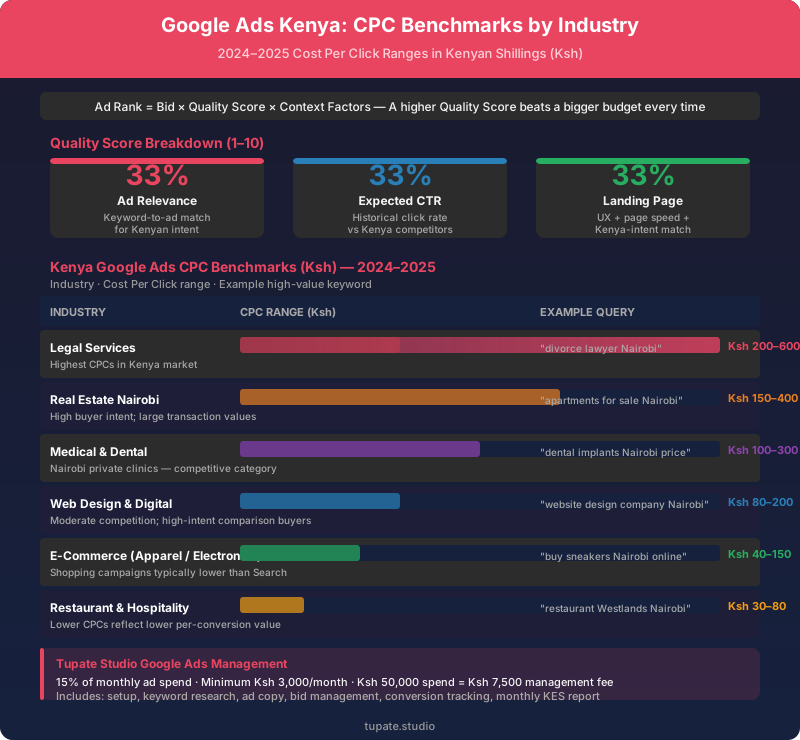
Quality Score: Google rates each ad on three factors, relevance of the ad to the keyword, expected click-through rate based on historical performance, and landing page experience (how well the destination page satisfies the user's search intent). Quality Score is scored 1–10. A higher Quality Score means Google rewards you with a lower CPC for the same position, a well-optimized Kenyan ad campaign can achieve a higher position than a competitor with a larger budget but a lower Quality Score.
Ad Rank: the formula that determines which ads appear and in which position is Ad Rank = Bid × Quality Score × context factors. This means a Kenyan business with a Ksh 150 bid and a Quality Score of 8 can outrank a competitor with a Ksh 300 bid and a Quality Score of 3. Investing in ad relevance and landing page quality is the highest-ROI optimization a Kenyan business can make in Google Ads.
Kenya CPC advantage: Google Ads CPCs in Kenya are significantly lower than in UK and US markets for comparable keyword categories. A Nairobi legal keyword that costs Ksh 200–600 per click would cost the equivalent of Ksh 4,000–8,000 in London. Kenya's relatively lower competition in most categories means Kenyan businesses can acquire high-intent search traffic at costs that would be impossible in saturated Western markets.
Campaign structure: Account contains Campaigns (organized by objective or product category), each Campaign contains Ad Groups (organized by keyword theme), each Ad Group contains Ads and Keywords. A well-structured campaign for a Nairobi service business might have separate campaigns for different service lines, with each campaign containing tightly themed ad groups of 5–15 closely related keywords.
Billing in Kenya: Google Ads bills in USD by default. Kenyan businesses can pay via M-Pesa through Google's partnership with Safaricom, eliminating the requirement for an international Visa or Mastercard that previously excluded many Kenyan SMEs from running Google Ads campaigns.
Google Ads Campaign Types Available to Kenyan Businesses Match Every Business Model From Nairobi Service Firms to Kenya-Wide E-Commerce
Google Ads is not a single campaign type, it is a platform with six distinct campaign formats, each optimized for a different business goal and audience behaviour. Choosing the right campaign type for your specific Kenyan business model is one of the most consequential decisions in any Google Ads strategy.
Search campaigns show text ads in Google.co.ke search results when a Kenyan user searches for a specific keyword. This is the highest-intent campaign type, the user is actively searching for what you sell. Search campaigns are the primary format for Kenyan service businesses: law firms, dental clinics, web design agencies, accounting firms, consultants. The ads appear above and below organic results with a subtle "Sponsored" label.
Display campaigns show image banner ads on Google partner websites, Kenyan news platforms, blogs, and apps that carry Google AdSense advertising. Display campaigns serve brand awareness goals rather than direct response. A Nairobi restaurant launching a new location can run Display ads across Kenyan news and lifestyle sites to build awareness before opening day.
Shopping campaigns show product photos, names, and prices directly in Google Search results. For Kenyan e-commerce businesses selling physical products, electronics, fashion, home goods, Shopping campaigns display product listings that Kenyan buyers click to purchase. Shopping campaigns require a Google Merchant Center account with a product feed.
YouTube/Video campaigns show video ads before and during YouTube videos. YouTube reaches over 20 million monthly users in Kenya. Pre-roll ads before popular Kenyan content channels reach audiences by interest, demographic, and keyword. Video campaigns build brand awareness and are increasingly effective for Kenyan B2C businesses with strong visual product stories.
Performance Max is Google's AI-automated campaign type that places ads across all Google channels simultaneously, Search, Display, YouTube, Gmail, and Maps. Google's algorithm manages targeting, bidding, and placement optimization. Performance Max suits Kenyan businesses willing to give Google significant creative and targeting control in exchange for broader reach and automated optimization.
Remarketing campaigns show ads to previous Kenyan website visitors as they browse other Google partner websites and apps. A Kenyan user who visited your website but did not contact you sees your ads for the following 7–30 days. Remarketing conversion rates are significantly higher than prospecting campaigns, these users already know your business and are in active consideration. CPCs for remarketing are typically lower than search campaigns because the audience is smaller and warmer.
Kenyan use cases by campaign type at a glance: law firm in Nairobi, Search campaigns targeting "lawyer [practice area] Nairobi"; restaurant in Westlands, Local Search plus Display campaigns; e-commerce in Kenya, Shopping plus Remarketing; training institute, Search plus YouTube; hotel in upcountry Kenya, Search plus Display for awareness.
Google Ads Costs in Kenya Range From Ksh 30 to Ksh 600 Per Click Depending on Industry Competition and Keyword Specificity
Kenyan businesses planning a Google Ads budget need accurate CPC benchmarks before campaign launch. Budgeting based on US or UK CPC data significantly overestimates Kenya costs, but underestimating competitive Kenyan niches leads to underfunded campaigns that cannot gather enough data to optimize effectively.
Kenya CPC benchmarks by industry (2024–2025 approximate ranges):
- Legal services, Ksh 200–600 per click. The highest CPCs in the Kenyan market reflect the high value of each converted lead (a legal matter can generate Ksh 50,000–500,000 in fees).
- Medical and dental services, Ksh 100–300 per click. Nairobi private clinic keywords are competitive; Mombasa and upcountry medical keywords are typically lower.
- Web design and digital marketing, Ksh 80–200 per click. Moderate competition with high-intent buyers actively comparing agencies.
- Real estate Nairobi, Ksh 150–400 per click. High buyer intent; property purchase decisions justify higher CPCs given transaction values.
- Restaurant and hospitality, Ksh 30–80 per click. Lower CPCs reflect lower conversion values, a restaurant booking or table reservation is worth less than a legal or property engagement.
- E-commerce (apparel and electronics), Ksh 40–150 per click. Shopping campaigns typically deliver lower CPCs than Search campaigns for the same product category.
Budget minimums for meaningful Kenyan campaign results: service businesses running Google Search campaigns need a minimum of Ksh 15,000–25,000/month in ad spend to gather enough click and conversion data for optimization. Campaigns below this threshold generate too few conversions per month to allow Google's algorithm to learn from Kenyan user behaviour patterns. Kenyan e-commerce businesses running Shopping campaigns require Ksh 20,000–40,000/month minimum to achieve competitive visibility across product categories.
Tupate Studio management fee: 15% of monthly ad spend, minimum Ksh 3,000/month. A Kenyan business spending Ksh 20,000/month on ads pays Ksh 3,000 in management (minimum applies). A business spending Ksh 50,000/month pays Ksh 7,500 in management. The management fee covers campaign setup, keyword research, ad copywriting, bid management, conversion tracking, and monthly performance reporting in Ksh.
Return on Ad Spend (ROAS) expectations for Kenya: well-managed Google Ads campaigns for Kenyan service businesses typically achieve 3–8× ROAS within three months of optimization. This means Ksh 3–8 in revenue for every Ksh 1 in ad spend. New campaigns require a 4–8 week optimization period before ROAS stabilizes, Kenya-specific user behaviour patterns (high mobile usage, WhatsApp preference for contact) must be learned by the campaign algorithm before bidding is fully optimized.
Targeting Kenyan Audiences With Google Ads Requires Kenya-Specific Geographic, Keyword, and Device Adjustments That Most Agencies Miss
Running Google Ads in Kenya without Kenya-specific targeting adjustments is like broadcasting a radio ad at the wrong time to the wrong station. The default Google Ads targeting settings are designed for global campaigns, Kenyan businesses need deliberate adjustments to reach the right Kenyan audience at the right cost.
Geographic targeting: Google Ads allows targeting at county level, Nairobi County, Mombasa County, Kisumu County, Nakuru County, or at city level. Radius targeting allows you to define a distance from a specific location, for example, within 10km of Nairobi CBD. A Nairobi clinic accepting walk-in appointments should target within 5–15km of their location; a national e-commerce business should target all of Kenya. Avoid the default "Kenya + areas of interest" setting, it includes users outside Kenya who have shown interest in Kenyan content, diluting your budget on non-Kenyan buyers.
Kenya-specific keyword modifiers: generic keywords without Kenyan modifiers attract global traffic that cannot convert into Kenyan customers. Include "Nairobi," "Mombasa," "Kenya," or county names in keywords, "website design Nairobi" outperforms "website design" for Kenyan business conversion rate at lower wasted spend. Long-tail Kenyan keywords, "affordable wedding photographer Westlands", have lower CPCs and higher conversion rates than broad keywords.
Audience targeting layers: demographic targeting allows bid adjustments by age and gender for Kenyan audiences. In-market audiences allow targeting of Kenyan users whom Google has identified as actively researching your category, Google detects research patterns from search history and site visit data. Customer Match allows you to upload your existing Kenyan customer email list; Google matches it to signed-in Google users and creates a targeting audience of your existing customer base for upsell and retention campaigns.
Device targeting and bid adjustments: Kenyan Google Ads traffic is 70%+ mobile, Tecno, Infinix, and Samsung users on Safaricom 4G dominate most Kenyan business website sessions. Increase mobile bid adjustments by 15–30% if your landing page is mobile-optimized and your conversion actions (WhatsApp link, phone click) are mobile-centric. Reduce desktop bids if desktop conversion rates in your Kenyan campaign data are significantly lower than mobile.
Time targeting (ad scheduling): for Kenyan B2B businesses, Monday to Friday from 8AM–6PM EAT typically produces the best conversion rates, business decision-makers are in their offices and actively evaluating services. For Kenyan B2C businesses (restaurants, e-commerce, beauty services), 6PM–10PM EAT on weekday evenings and weekends shows strong conversion performance as Kenyan consumers are browsing and making purchase decisions during personal time.
Language targeting: set English as primary language. Swahili-language ads can be effective for Kenyan B2C audiences in specific categories, particularly retail, food, and community services. Testing Swahili ad copy alongside English is a low-cost experiment that can reveal underserved Kenyan audience segments.
Conversion Tracking Is Non-Negotiable for Kenyan Google Ads, Without It You Are Spending Ksh Blind
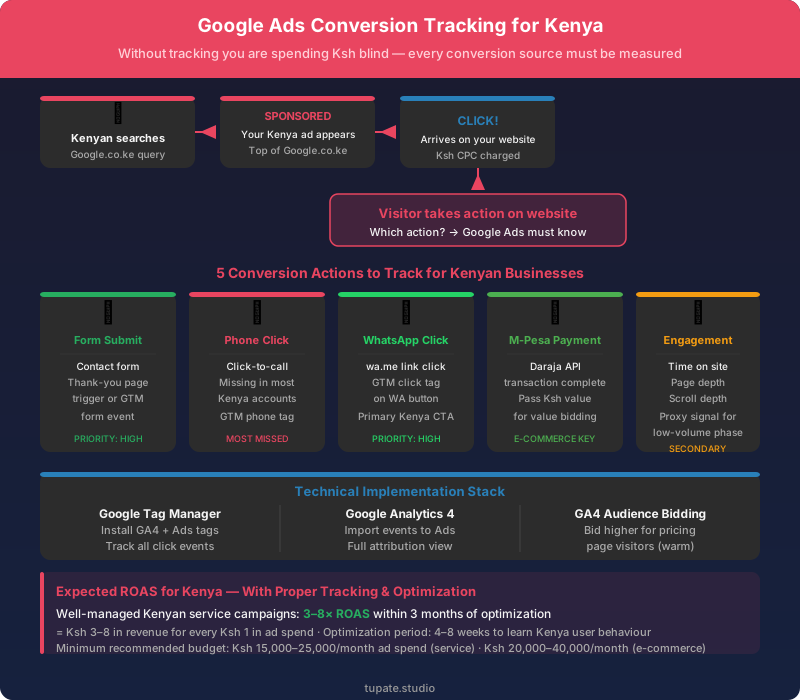
Conversion tracking connects specific ad clicks to specific customer actions on your Kenyan website. Without conversion tracking, you know how many Kenyan users clicked your ads and how much those clicks cost, but you do not know which clicks became inquiries, which became WhatsApp contacts, and which became paying M-Pesa customers.
Optimizing a Kenyan Google Ads campaign without conversion data is guesswork; with conversion data it becomes a systematic process of scaling what works and eliminating what wastes budget.
Conversion actions to configure for Kenyan businesses:
Contact form submissions, the most common lead action on Kenyan business websites. Configure a "thank you" page trigger or a form submission event in Google Tag Manager.
Phone call clicks, critical for Kenya. A large proportion of Kenyan mobile users tap a phone number on a website and call directly rather than filling any form.
Click-to-call conversion tracking is missing from most Kenyan Google Ads accounts, this means the genuine lead generation value of ads that drive phone calls is invisible. Tupate Studio configures click-to-call tracking on every Kenyan website and Google Ads account we manage.
WhatsApp link clicks, tracking wa.me link clicks as conversion events in Google Tag Manager reveals how many Kenyan website visitors from each campaign are converting into WhatsApp inquiries. This is the most important conversion event for most Kenyan service businesses, yet it is routinely unconfigured.
M-Pesa payment completions, for Kenyan e-commerce websites with Daraja API integration, each completed M-Pesa payment is the definitive conversion event. Passing conversion value data (the Ksh amount of each transaction) back to Google Ads enables value-based bidding, which instructs Google's algorithm to optimize for maximum revenue rather than just maximum conversions.
Time on site and page depth, proxy conversion events for engaged Kenyan visitors who spend significant time on the site or visit multiple pages. Useful as secondary optimization signals when direct conversion events (form, call, WhatsApp) are low-volume in the early campaign period.
Technical implementation: conversion tracking is installed via Google Ads conversion tags in Google Tag Manager, or by importing Google Analytics 4 conversion events into Google Ads. GA4 integration is Tupate Studio's preferred approach, it consolidates all Kenyan website measurement in one platform and enables cross-channel attribution showing the full customer journey from first Google search to final M-Pesa payment.
Linking GA4 to Google Ads enables audience-based bidding using GA4 audience segments, for example, bidding higher for Kenyan users who have previously visited your pricing page (high-intent behaviour) than for first-time Kenyan visitors. This level of targeting refinement reduces wasted spend and improves ROAS without increasing budget.
What makes the difference between Kenyan Google Ads campaigns that waste budget and campaigns that generate profitable leads is not bid strategy or keyword research alone, it is the landing page and keyword-to-intent alignment. A Nairobi service business sending Google Ads traffic to a generic homepage loses to a business sending the same traffic to a dedicated, conversion-optimized landing page that exactly matches what the Kenyan searcher typed. One of the most direct ways to improve Google Ads Quality Score and reduce cost per click is to improve landing page speed Kenya, slow landing pages waste ad spend because Google penalises poor page experience in its auction scoring.
Keyword selection must also match Kenyan search intent precisely, bidding on broad terms without Kenya-specific modifiers wastes budget on global traffic that cannot convert. Our landing page design Kenya service and SEO keyword research Kenya service directly support Google Ads performance, and are available as standalone services or bundled with Tupate Studio's Google Ads management. WhatsApp us to discuss your Kenyan Google Ads strategy.
Google Ads FAQs for Kenyan Businesses Answer the Most Common Questions About ROI, Timeline, and M-Pesa Payment
Frequently Asked Questions
Is Google Ads worth it for a small Kenyan business?
Yes, for Kenyan businesses selling services or products that customers actively search for on Google. A Ksh 15,000–20,000/month Google Ads budget managed by Tupate Studio can generate 20–50 qualified leads per month for a Nairobi service business, at a cost-per-lead of Ksh 300–1,000 depending on industry competition and landing page conversion rate. For businesses in niches where Kenyan customers do not typically search Google, products that rely on social media discovery or impulse purchase, Google Ads is less effective and social media advertising is the better channel.
How quickly do Google Ads start generating results in Kenya?
Ads can appear on Google.co.ke within hours of campaign launch after Google's brief review process. Meaningful results, consistent lead generation at predictable cost, typically require two to four weeks of data collection and optimization. Full campaign performance optimization, where Google's algorithm has learned from Kenyan user behaviour patterns and bid optimization is stable, takes four to eight weeks. Tupate Studio provides weekly performance updates during the optimization period so you see progress throughout the learning phase.
Can I pay for Google Ads with M-Pesa in Kenya?
Yes, Google has partnered with Safaricom to allow M-Pesa payments for Google Ads accounts registered in Kenya. This removes the requirement for an international Visa or Mastercard that previously prevented many Kenyan SME owners from running Google Ads campaigns directly. To use M-Pesa billing, your Google Ads account must have a Kenya billing address and the M-Pesa option will appear in the payment settings. Tupate Studio assists all new Google Ads clients with account setup and M-Pesa billing configuration as part of campaign onboarding.