A Kenyan business website without analytics is like a shop with no visibility into how many people visited, what they looked at, and who bought. Google Analytics 4 (GA4) and Google Search Console give you this visibility for free, showing exactly how many Kenyan visitors came to your site, which pages they visited, how long they stayed, which Google searches brought them, and most importantly: which visitors converted to customers.
Without these tools installed and correctly configured, every decision about your website is made without data.
Setting up Google Analytics 4 for a Kenyan business website requires four specific configuration steps beyond the default install to ensure data reflects actual Kenyan business performance.
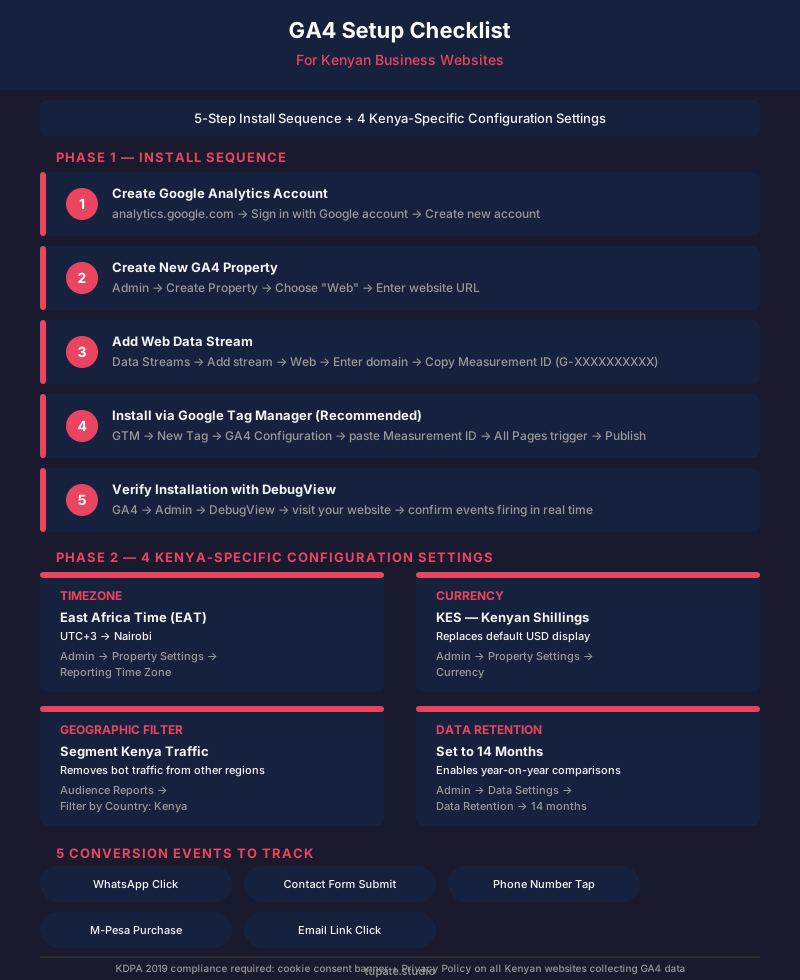
The GA4 setup process follows a defined sequence: create a Google Analytics account, create a new GA4 property, add a data stream for your website, copy the Measurement ID (format: G-XXXXXXXXXX), and install it on your website. Installation has two methods, via Google Tag Manager (GTM) or via a direct HTML tag in the website's head section.
Google Tag Manager is the recommended method for Kenyan business websites because it allows adding, modifying, and testing GA4 events and other measurement tags without editing the website's source code. This is particularly valuable when you need to add WhatsApp click tracking later without involving a developer.
Four Kenya-specific configuration settings are required after the basic install. First, set the timezone to East Africa Time (EAT, UTC+3) in Admin → Property Settings → Reporting Time Zone. Without this, your GA4 reports show data aligned to US or European time zones, sessions that started at 11pm Nairobi time appear in the wrong day's data, distorting daily traffic comparisons. Second, set the currency to KES (Kenyan Shillings) in Admin → Property Settings → Currency.
Revenue tracking displayed in USD is not useful for Kenyan SME financial reporting. Third, apply a geographic filter in your Audience reports to segment by Kenya, this separates genuine Kenyan customer traffic from bot traffic originating in other regions, which inflates raw session counts. Fourth, change data retention from the default 2 months to 14 months in Admin → Data Settings → Data Retention. The 2-month default means you cannot perform year-on-year comparisons unless you export data manually, a significant limitation for monthly reporting.
For Kenyan e-commerce websites, additional configuration is required: enable enhanced measurement (automatic scroll tracking, file download tracking, video engagement), configure the purchase event with KES transaction values, and connect GA4 to Google Ads if you are running paid search campaigns. Tupate Studio installs and fully configures GA4 on every website we build, tracking is live from launch day, not added as an afterthought.
WhatsApp us if your existing Kenyan website has GA4 installed but not properly configured.
Kenyan businesses should track five metric categories in GA4 — traffic volume, traffic source, engagement depth, device type, and conversion events, because each answers a different question about business performance.
Traffic metrics answer the fundamental question: how many Kenyan customers found your website? Users represents unique Kenyan visitors in a given period, this is your net audience size. Sessions represents total visits, one user returning three times in a month counts as three sessions.
Tracking both separates audience growth (new users) from engagement frequency (returning visitors). Traffic source breakdown is among the most important reports for Kenyan business strategy: Organic Search shows visitors from Google.co.ke, Direct shows visitors who typed your URL or used a bookmark, Referral shows visitors who clicked a link on another Kenyan website, and Social shows visitors from Facebook, LinkedIn, or Instagram Kenya. The proportion of Organic Search traffic is the key indicator of whether your on-page SEO services Kenya are generating returns.
Engagement metrics in GA4 replace the old bounce rate concept with more meaningful measures. Engaged sessions counts visits where a Kenyan user stayed longer than 10 seconds, scrolled significantly, or completed an interaction, this is a far more accurate measure of content quality than the old bounce rate, which penalised fast page reads even when the user found exactly what they needed.
Average engagement time shows how long Kenyan visitors spend on the site, a 3-minute average for a service page indicates the content is holding attention. Pages per session shows how many pages a typical Kenyan visitor views before leaving, higher values indicate strong internal navigation and broad topic interest.
Device breakdown is critical for Kenyan business websites. In Kenya, 80% or more of website traffic should arrive via mobile phone.
If your GA4 device breakdown shows desktop dominant, investigate immediately, this typically indicates a mobile UX problem that is suppressing mobile traffic. Kenyan users who encounter a non-mobile-friendly website leave in seconds, and GA4 registers these sessions in desktop data if the visitor used a tablet or an older phone running a desktop browser mode.
Conversion metrics are the most commercially important data in GA4. Conversions are defined events that represent business value: contact form submissions, WhatsApp button clicks, phone number taps, and for e-commerce, completed purchases.
Conversion rate, the percentage of Kenyan visitors who complete a conversion action, is the single most important metric for evaluating website commercial effectiveness. A Kenyan business website receiving 1,000 visitors per month with a 3% conversion rate (30 leads) is performing better than a website with 3,000 visitors at 0.5% conversion (15 leads).
Conversion tracking for Kenyan business websites must include WhatsApp button clicks as a primary conversion event, because for most Kenyan businesses, WhatsApp is where sales enquiries arrive.
Traffic volume without conversion tracking is a vanity metric. Knowing that 500 Kenyans visited your website last month tells you nothing about business results.
Knowing that 22 of those 500 clicked your WhatsApp button (4.4% conversion rate) gives you a performance benchmark and a cost-per-lead calculation. Conversion tracking transforms GA4 from a statistics report into a business intelligence tool.
For Kenyan businesses, five conversion events cover the majority of lead and revenue generation activities. The contact form submission event (form_submit in GA4) tracks enquiries submitted via your website contact form. The phone call click event tracks when a Kenyan mobile user taps your phone number link, these users are at the highest purchase intent stage.
The WhatsApp button click event (configured as an outbound_click event on the wa.me URL) is the single most important conversion event for Kenyan SME websites, a visitor who clicks through to WhatsApp has expressed direct purchase intent. For e-commerce websites, the M-Pesa payment completion event (purchase event with KES transaction value) tracks completed sales and calculates actual revenue attributed to website traffic. Email link clicks (outbound_click on mailto URLs) are lower intent but relevant for professional service businesses.
The setup method for all of these conversion events uses Google Tag Manager. In GTM: create a new GA4 Event tag, specify the event name, set a Click URL trigger matching the relevant URL pattern (wa.me for WhatsApp, tel: for phone, your form's confirmation page URL for form submissions).
Test in GTM Preview mode before publishing. This process requires no changes to your website code after the initial GTM installation, all tracking modifications happen within GTM.
Cost-per-lead calculation in Kenya: divide your monthly marketing spend (Ksh) by the number of WhatsApp or form conversion events in the same month. If you spend Ksh 20,000 on Google Ads and receive 40 WhatsApp clicks from those ads, your cost per lead is Ksh 500.
This calculation is only possible with conversion tracking properly configured, without it, Google Ads budget decisions are made without knowing whether the spend is generating enquiries. Tupate Studio configures all five standard conversion events for every website we build, delivering conversion data from the first week of launch.
Google Search Console gives Kenyan businesses pre-click search data that GA4 cannot provide, showing exactly which Kenyan queries earn rankings, impressions, and clicks from Google.co.ke.
Google Search Console (GSC) is a free tool that shows how your Kenyan website performs within Google's search results, before a user ever arrives at your site. Where GA4 measures what happens after a Kenyan visitor lands on your website, GSC measures what happens in the search results: which queries your pages rank for, how many times Kenyans see your page in results (impressions), how many click through (clicks), your average position for each query, and your click-through rate (CTR).
For a Kenyan business investing in SEO, GSC is the primary performance measurement tool, it shows directly whether SEO work is producing rankings and clicks.
The Performance report in GSC is the starting point for monthly Kenya SEO analysis. Filter by Country: Kenya to see Kenya-specific search performance.
Export the top 50 queries by impressions monthly, this data shows which Kenyan search terms your website is being shown for, which you currently rank highly enough to receive clicks, and which you rank for but in positions too low to attract Kenyan visitors (positions 11–30 represent significant traffic opportunity if rankings can be improved).
The Coverage report shows which of your website pages Google has successfully indexed versus pages with errors. Common errors for Kenyan websites: server errors (5xx) from unreliable shared hosting, crawl-blocked pages from misconfigured robots.txt files, and duplicate content errors from www vs non-www URL variations. The website speed optimisation Kenya process addresses the server response time issues that cause crawl errors on slow Kenyan shared hosting.
Core Web Vitals in GSC shows real Kenyan user experience data, LCP (Largest Contentful Paint), INP (Interaction to Next Paint), and CLS (Cumulative Layout Shift), collected from actual Safaricom 4G and 3G users visiting your website. This is the authoritative data source for Google's page experience ranking signals.
Submitting your XML sitemap in GSC is a mandatory step after any new Kenyan website launch. In GSC: Sitemaps → enter your sitemap URL (typically yourdomain.co.ke/sitemap.xml) → Submit.
This instructs Google to crawl all pages of your website systematically rather than waiting for organic discovery, critical for new Kenyan websites with no external links pointing to them yet.
A complete monthly website report for a Kenyan business covers eight data categories and must be actionable, not a data dump, but a clear picture of what changed, why, and what to do next.
The structure of a useful monthly website report for a Kenyan business: total sessions and users with month-over-month percentage change (growth or decline requires explanation); traffic source breakdown showing the share of Organic, Paid, Social, and Direct traffic and changes in that mix; the top 5 pages by traffic volume (which content is driving Kenyan visitors); total conversion events by type (WhatsApp clicks, form submissions, calls) with conversion rate; Google Search Console's top 10 organic queries by impressions with average positions and clicks; Core Web Vitals pass/fail status per Google's assessment of real Kenyan user experience data; and a commentary section noting any significant anomalies, ranking changes, or actionable observations.
Looker Studio (formerly Google Data Studio) is the industry standard tool for building these reports as live dashboards. Looker Studio is free, connects directly to GA4 and Google Search Console, and generates shareable links, Kenyan business owners can view their website performance data in real time, on mobile, without requesting a report. Tupate Studio provides Looker Studio dashboards for all SEO and web design clients.
The dashboard displays all eight monthly report categories on a single screen, updated live from GA4 and GSC. WhatsApp us if your current Kenyan website has no reporting dashboard.
KDPA compliance note: GA4 collects personal data from Kenyan website visitors, including IP addresses, device identifiers, and behavioural data. Under the Kenya Data Protection Act 2019, your website must display a Privacy Policy page that discloses what data is collected and how it is used, and must present a cookie consent banner that gives Kenyan visitors the option to accept or reject analytics tracking before data collection begins.
Kenya Data Protection Act compliance for analytics is not optional, the Office of the Data Protection Commissioner can investigate businesses that collect Kenyan user data without proper consent mechanisms in place.
How do website analytics connect to SEO strategy, and what data tells you whether your Kenyan website's SEO is working? Analytics is the feedback loop for SEO. Google Search Console shows which Kenyan queries your website ranks for, what positions it holds, and how many Kenyans click through to your pages. GA4 shows whether those organic visitors convert into WhatsApp enquiries, form submissions, or M-Pesa purchases.
Together, these tools tell you whether your SEO investment is delivering business results in Kenya, and which pages, keywords, and content to prioritise next. Our search engine optimization Kenya service includes monthly Looker Studio reporting as standard, you see exactly what your SEO investment is returning. Get a free quote today.
Analytics questions Kenyan business owners ask most frequently
These are the practical questions about Google Analytics 4, KDPA compliance, and website reporting that Kenyan businesses ask before investing in proper analytics configuration.
Frequently Asked Questions
Is Google Analytics 4 free for Kenyan businesses?
Yes, GA4 is completely free for all Kenyan businesses, with no usage limits for standard business websites. The paid tier (GA4 360, priced at hundreds of thousands of US dollars annually) is designed for enterprise companies with billions of events per month, Kenyan SMEs have no practical need for it. Google Analytics 4 and Google Search Console together give a Kenyan business all the data needed to make informed decisions about website content, SEO investment, and marketing spend, at zero cost.
Does my Kenyan website need a cookie consent banner?
Under the Kenya Data Protection Act 2019 (KDPA), websites collecting personal data, including analytics cookies, from Kenyan visitors must obtain informed consent before data collection begins. A cookie consent banner that gives Kenyan users a genuine choice to accept or reject analytics tracking is now legally required for Kenyan business websites. A banner that only says "we use cookies, by using this site you agree" without an opt-out option does not meet KDPA standards. Tupate Studio installs a KDPA-compliant cookie consent mechanism on all websites we build.
How do I know how many people visit my Kenyan website without Google Analytics?
Most Kenyan web hosting control panels (cPanel) include basic server-side statistics tools such as Awstats or Webalizer. These tools count HTTP requests to your web server, which means they count bot traffic, crawler visits, and other non-human requests alongside real Kenyan visitors. They are consistently less accurate than GA4 and cannot track conversion events like WhatsApp clicks or form submissions. Google Analytics 4 is the industry standard for Kenyan business website measurement and should be installed on every business website from launch. WhatsApp us to get GA4 properly configured on your existing Kenyan website.